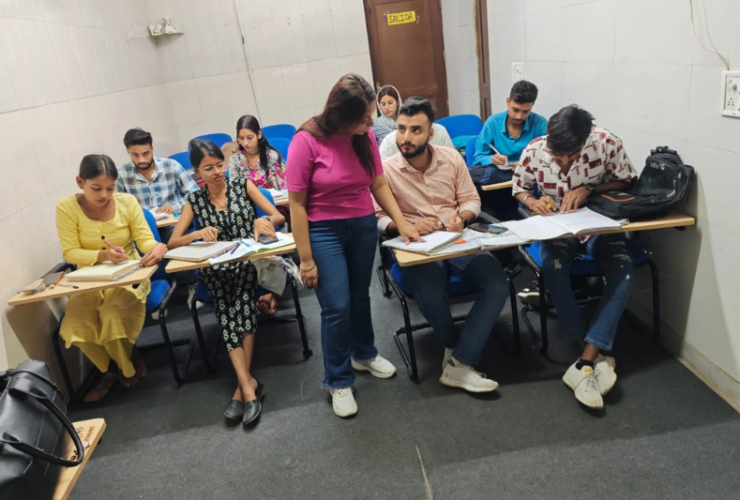

Vivid portrayal of text, accuracy in descriptions of feelings, images, etc., and compound words are several factors that give great emotional depth and are among the countless reasons why so many people love to learn the German Language. There are many words in the German Language that accommodate and describe feelings and thoughts in a manner that cannot be translated straight to the English language. English does have a propensity to carry off many of these words from German, but those words more often shuttle up much more than what tends to simply be translated into the English language.
No matter the reason, whether you are someone who is simply interested in learning German or just wishes to be multilingual, we have a perfect list of words specially curated for you folks. This list of words depicts how cultural impacts are heavily burdened by the vocabulary of any particular language. Here’s the list of 10 special German words that don’t exist in English (have no direct equivalent in English), with the proper meaning and a detailed explanation of each of these words. Now, let’s jump into the list.
1. German word: SCHADENFREUDE
English meaning: The pleasure derived from someone else’s misfortune
SCHADENFREUDE is a term that is made by combining two German words, namely “SCHADEN”, which means to wound or cause grief, and “FREUDE”, which means pleasure. The fair goal of this term is to recognise that an individual seeks pleasure (happiness) from someone else’s transgression. This German term was borrowed by English orators, even though there’s no analogous term that matches the core of this term.
2. German word: FERNWEH
English meaning: The opposite of homesickness, A longing for distant places
FERNWEH is a term that is made of two separate terms, “FERN” meaning far, and “WEH” meaning pain or ache. When combined, this term depicts the feeling of profound psychological yearning to travel afar from the place where one actually stays, which creates an inner eagerness for all the different kinds of astonishing and bewildering thoughts to explore new places situated at a distance, to stop by about the scenery, culture, and experiences that are far from our usual location.
3. German word: WELTSCHMERZ
English meaning: A feeling of Deep sorow regarding the state of the world
WELTSCHMERZ means sadness, but not just for oneself or the state of one’s living. The term is related to metaphysical disenchantment with the sphere near you. The references used here are social injustice, ecological problems, and the void between dreams and reality. This feels emotionally draining, and the unimpaired materiality of life brought the idea of Weltschmerz to viability. It is more analytical than being emotional, and nothing like being depressed.
4. German word: ZEITGEIST
English meaning: The attitude or mood belonging to a particular era
The term ZEITGEIST is made by combining two different words, “ZEIT” meaning time, and “GEIST” meaning spirit. True elucidation of this term is the overall vibe of an entire era, the ideas, the way of existing, the sentiments it holds, etc. The main factors affecting the zeitgeist of today’s era are the developing trend of the use of social media, the expansion of AI, and the consciousness of the environment.
5. German word: TORSCHLUSSPANIK
English meaning: The fear of running out of time (in order to accomplish something)
The word TORSCHLUSSPANIK initially signified the closing of doors of medieval cities at the dead of night, but in today’s era, with the same context, this term now indicates the anxiety of opportunities that are lost in our lives by the passage of time, when we hover over age. This type of anxiety typically varies from other types since it is particularly looped around a milestone or deadline in the life of any human being.
6. German word: GEBORGENHEIT
English meaning: The impression of kindness, well-being, and emotional security
GEBORGENHEIT is the sense of inner peace, faith, ease of mind, and protection, that’s more than just physicality. The term and the feeling permeate the sensibility of being safe, secure, celebrated, and, most importantly, the ease of emotional availability that is particularly seen and felt at home with people who are close to your heart, linked to childhood memories. In English, people use terms like cozy and safe, but they fail to channel the quality of Geborgenheit emotionally.
7. German word: KUMMERSPECK
English meaning: The body weight that is gained due to emotional eating
Kummerspeck is an entertaining yet genuine term that resembles the extra weight that an individual gains due to emotional eating, which primarily takes place due to grief, sadness, or irritability. This term is a combination of two words, “KUMMER” which means sorrow, and “SPECK” which means fat. The logic behind this term was that food is equal to comfort, but psychologically, when someone doesn’t feel at ease, they try to find mental comfort by eating.
8. German word: WALDEINSAMKEIT
English meaning: Isolation that feels comforting, typically deep inside a silent forest
The term WALDEINSAMKEIT is used to define tranquillizing incident in remoteness deep inside the lap of mother nature, more particularly with trees. It is evident that there’s no other thing on the planet which is quieter, more beautiful, and at peace for anyone than being in a forest which is full of lush green trees and freshness. As humans don’t find peace in today’s era due to being busy with excessive workload, and the digital era. The soul needs muffled places to recharge similarly as gadgets need electricity.
9. German word: FREMDSCHAMEN
English meaning: To feel humiliated on someone else’s behalf
The feeling of FREMDSCHAMEN occurs when an individual spectates other human beings in a previously awkward situation, and makes another similar blunder in public. Some common examples are when someone cracks a joke which he finds funny, but is actually not funny to others, an awkward moment on reality shows on television, etc. In English, people casually mention the term secondhand embarrassment.
10. German word: FEIERABEND
English meaning: Happy feeling of signing off from work for the day
FEIERABEND can simply be described as an emotionally jolly state of mind where work duties are wrapped up for the day. The feeling which you experience when you walk away from your workplace after a hectic day at work, after switching off your laptop or computer system.
CONCLUSION
The German language gives us a distinctive way to express ourselves and our thoughts emotionally as well as psychologically, which no other language can describe with the same beauty. All the above-mentioned terms of the German Language are the best examples of different kinds of human emotions that are not really easy to express to others in mere words.